
Estimated reading time: 6 minutes
It’s a common assumption that cyberattacks only happen to large organisations.
In reality, small and medium-sized businesses are targeted just as often, and in many cases, more successfully.
Not because attackers are focusing on them specifically, but because they are easier to get into.
According to the UK Government’s Cyber Security Breaches Survey 2025, around 43 percent of businesses experienced a cyber breach or attack in the last 12 months. That represents hundreds of thousands of UK businesses dealing with real-world incidents every year.
This highlights an important shift. Cybersecurity is no longer just an enterprise concern. It is a business-wide responsibility, regardless of size.
Why Small Businesses Are Frequently Targeted
Most cyberattacks today are automated rather than targeted.
Attackers use tools that continuously scan the internet, looking for common weaknesses such as outdated software, exposed services, or weak login credentials. These tools do not distinguish between small and large organisations. They are simply looking for systems that are easy to compromise.
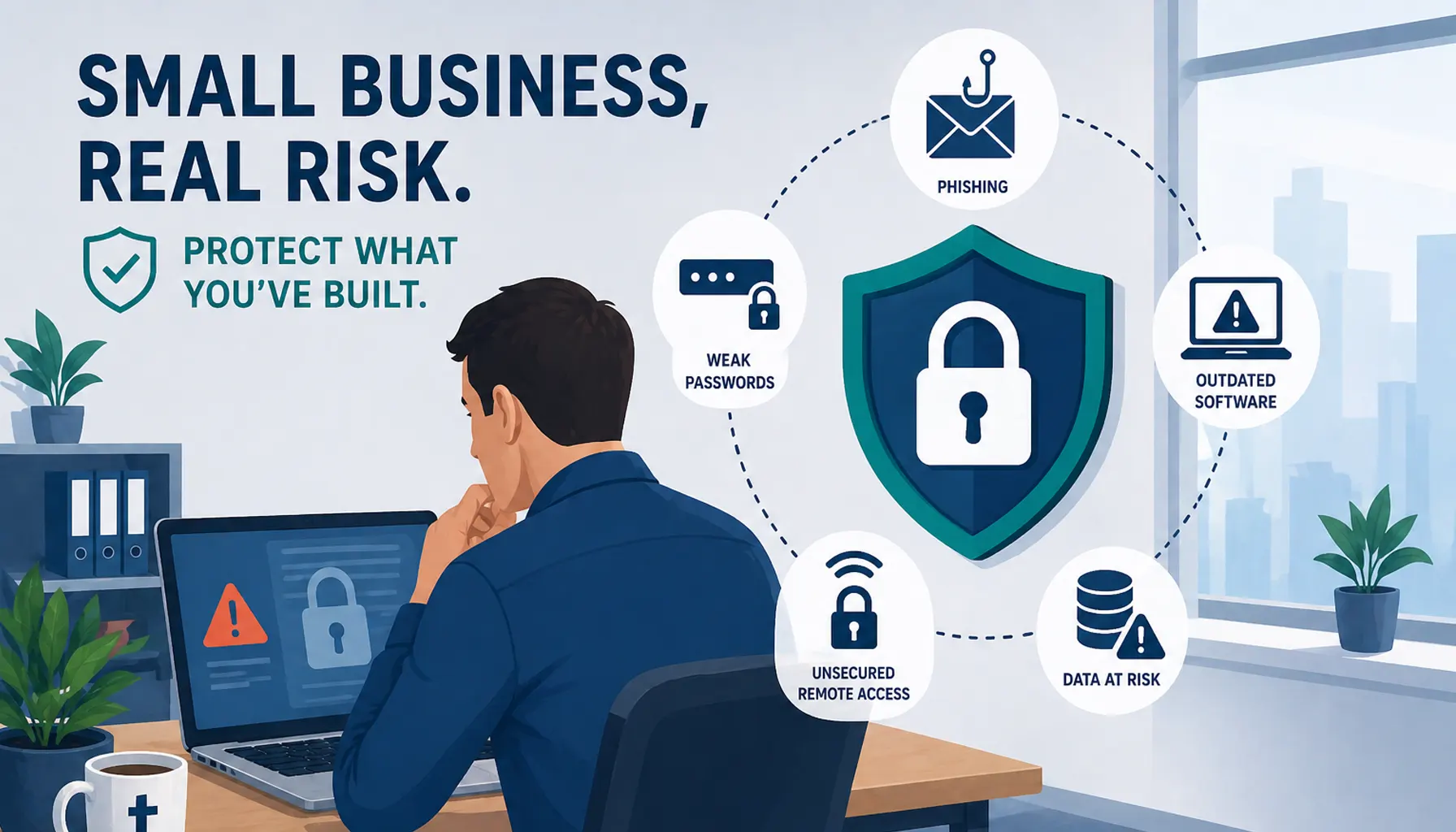
Common entry points include phishing emails that capture login details, poorly secured remote access such as RDP or VPNs, unpatched software vulnerabilities, and weak or reused passwords.
Phishing remains the most common method of attack, with research showing that up to 85 percent of businesses encounter phishing attempts each year.
Because these attacks are automated and persistent, small businesses are constantly being tested, often without any visible signs.
How Common Are Attacks on Small Businesses?
The numbers reinforce just how widespread this issue has become.
Around 42 percent of small businesses report experiencing a breach or attack, while medium-sized organisations see even higher rates. As businesses grow, they often become more complex, which can introduce additional security challenges.
The key takeaway is simple. This is not a rare event. It is something that happens regularly across businesses of all sizes.
What varies is not whether an organisation is targeted, but how prepared it is when it happens.
What Makes Small Businesses More Vulnerable
The biggest difference between organisations is not size, it is maturity.
Larger organisations typically have dedicated IT teams, structured processes, and multiple layers of protection. Smaller businesses often operate with limited resources, which can lead to gaps over time.
In many cases, this means slower patching, limited monitoring, and fewer formal security controls.
Recent data shows that only around 40 percent of businesses use multi-factor authentication, and even fewer actively monitor for suspicious activity.
This gap is where most successful attacks occur. The tools to reduce risk already exist, but they are not always implemented or maintained consistently.
What Happens After an Attack
Once attackers gain access, they rarely stop at a single action.
They often begin by exploring the environment quietly, identifying valuable data and looking for ways to expand access. From there, the impact can escalate quickly.
This may involve deploying ransomware, stealing sensitive information, creating hidden user accounts, or attempting to disable backups.
For many businesses, the consequences go beyond the technical impact. Downtime, financial loss, regulatory obligations, and reputational damage can all follow.
Even relatively small incidents can have a lasting effect.
How to Reduce the Risk
The good news is that most successful attacks rely on basic weaknesses.
This means risk can be significantly reduced by focusing on a small number of core controls and applying them consistently.
Key areas include using multi-factor authentication on email and remote access, keeping systems updated, implementing endpoint protection, and ensuring backups are secure and regularly tested.
It is also important to build awareness across your team. Many attacks still begin with simple human error, so helping staff recognise suspicious emails or unusual activity can make a real difference.
These measures do not require large budgets or complex systems. They require clear priorities and a proactive approach.
Small Businesses Don’t Need Complexity, They Need Clarity
Security does not need to be complicated to be effective.
Most breaches occur not because attackers are highly sophisticated, but because basic protections were missing or not maintained.
Small businesses do not need enterprise-level solutions, but they do need a clear understanding of their risks and a plan to manage them.
A good place to start is the UK’s Cyber Essentials framework, which provides a practical baseline for securing systems and reducing exposure to common threats.
Frequently Asked Questions
Do hackers really target small businesses?
Yes. Most attacks are automated and scan for vulnerabilities across all businesses, regardless of size.
Why are small businesses more vulnerable?
Smaller businesses often have fewer security controls, less monitoring, and limited internal IT resources, which can make them easier targets.
What is the most common way hackers get in?
Phishing emails, weak passwords, and unpatched software are among the most common entry points.
Can small businesses afford good security?
Yes. Many effective security measures are relatively low cost and focus on good practices rather than expensive tools.
What is Cyber Essentials?
Cyber Essentials is a UK government-backed scheme that outlines basic security controls to help protect organisations from common cyber threats.
Taking a More Proactive Approach to Security
At Telanova, we help businesses across Wokingham, Ascot, Bracknell, Reading and the wider Berkshire region improve their security with practical, reliable IT support.
Whether you want to strengthen your current setup or work towards Cyber Essentials certification, we can help you understand where you stand and what to do next.
If you would like a clearer picture of your current security and where improvements can be made, we are always happy to offer straightforward advice.
Explore our IT support services or call 01344 989 530 to speak with our team.