Estimated reading time: 6 minutes
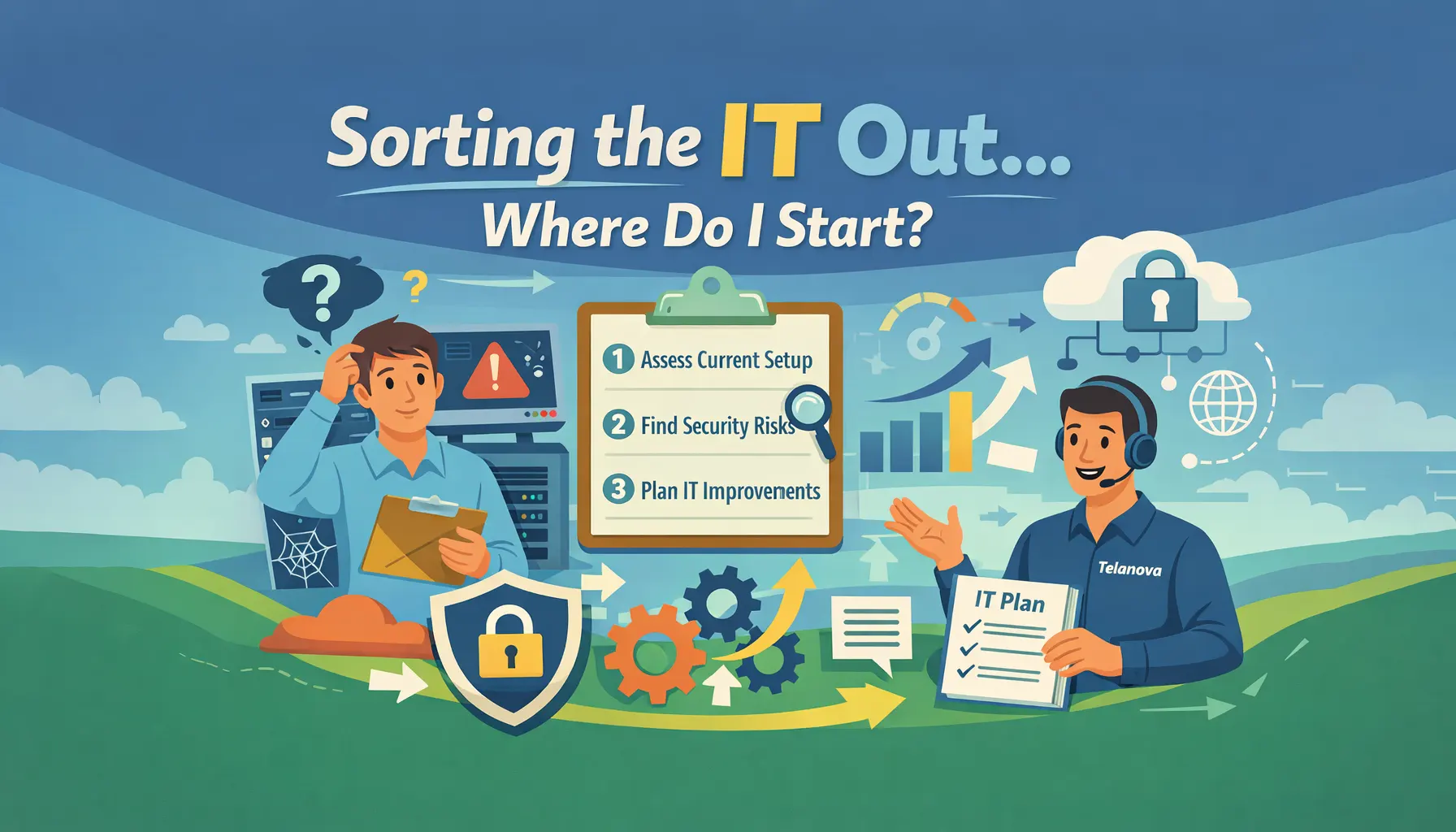
If you’re reading this, chances are someone in your organisation has handed you the slightly vague - but very important - task of “sorting the IT out.”
Maybe things have been running on autopilot for too long.
Perhaps a recent issue exposed some gaps.
Or growth has simply made your current setup harder to manage.
Whatever the reason, knowing where to start can feel overwhelming.
The good news? It doesn’t have to be.
Start With Understanding: Where Are You Today?
Before making any changes, it’s important to understand what you already have in place.
This step is less about fixing problems and more about building a clear picture of how things currently work. Speaking to people across the business often reveals far more than looking at systems alone.
Start by gathering the basics:
- What devices are being used? (laptops, desktops, servers, mobiles - including age and condition)
- What systems and software are in place? (email, file storage, business apps, security tools)
- Who currently looks after IT? (internal staff, external providers, or a mix of both)
- What are people struggling with day to day? (slow systems, recurring issues, lack of support)
At this stage, you’re not trying to solve everything. You’re building visibility - and that alone is a huge step forward.
Identify Immediate Risks and Vulnerabilities
Once you understand the current setup, the next step is identifying anything that could put the business at risk.
Some issues are more urgent than others, particularly those linked to security or data protection.
Common risks to look out for include:
- Devices or operating systems that are no longer supported
- Weak or reused passwords across systems
- No multi-factor authentication (MFA) in place
- Backups that are inconsistent, untested, or missing
- Systems that haven’t been patched or updated
- Staff using personal devices without proper controls
- No endpoint protection or monitoring tools
These issues don’t just slow things down - they can lead to serious consequences if left unresolved.
Addressing them early helps prevent far bigger problems later.
Understand What the Business Actually Needs
IT should support the business - not just exist in the background.
That’s why it’s important to step back and understand what the organisation is trying to achieve.
Speak with leadership and teams to understand:
- What are the short-term and long-term business goals?
- Where are teams losing time or feeling frustrated?
- Are there processes that could be improved with better systems?
- What opportunities could be unlocked with the right technology?
This ensures the work you do isn’t just reactive, but aligned with where the business is heading.
Document Everything (Even the Messy Bits)
Documentation is often overlooked, but it’s one of the most valuable steps you can take.
Clear documentation turns confusion into clarity and removes reliance on individual knowledge.
Start building:
- Asset lists (devices and systems)
- User access and permissions
- Basic network overview
- Backup processes and schedules
- Secure credential management
- Simple IT policies
It doesn’t need to be perfect - it just needs to exist.
Even basic documentation can significantly reduce stress and improve day-to-day operations.
Create a Prioritised IT Improvement Plan
Once you understand your starting point, risks, and business needs, you can build a simple roadmap.
Breaking it into phases makes it far more manageable:
Short Term (0–3 Months)
Focus on the essentials:
- Security improvements (MFA, patching, endpoint protection)
- Backup setup and verification
- Replacing critical outdated hardware
Medium Term (3–12 Months)
Start improving how the business operates:
- Standardising devices and systems
- Improving workflows and processes
- Reviewing cloud setup and collaboration tools
- Refining onboarding and offboarding processes
Long Term (12+ Months)
Look ahead to growth and efficiency:
- Modernising systems
- Introducing automation
- Planning for scalability
- Aligning IT with business strategy
Don’t Try to Do Everything Alone
You don’t need to become an IT expert overnight.
Trying to manage everything internally can quickly become overwhelming, especially alongside your existing responsibilities.
Working with the right IT partner means:
- You get guidance on what actually matters
- You avoid costly mistakes
- You implement solutions that are built to last
The goal isn’t just to “sort the IT out” - it’s to create something that supports your team, protects your business, and scales with you.
Frequently Asked Questions
Where should I start if I’ve inherited IT responsibilities?
Start by understanding what you already have - devices, systems, and processes - before making any changes. Building a clear picture is the first step.
What is the biggest IT risk for small businesses?
Lack of basic security measures such as MFA, patching, and reliable backups are among the most common risks.
Do I need an IT strategy?
Yes. Even a simple plan helps ensure your technology supports your business goals rather than reacting to problems.
How quickly should I fix IT issues?
Security risks should be addressed immediately, while other improvements can be prioritised over time.
Can I manage IT without an internal team?
Yes, many businesses rely on external IT support providers to manage and guide their systems effectively.
Ready to Get Started?
Taking ownership of IT doesn’t have to be overwhelming.
With the right approach, you can turn uncertainty into clarity and build a setup that genuinely supports your business.
At Telanova, we help businesses across Wokingham, Ascot, Bracknell, Reading and the wider Berkshire region take control of their IT with practical, reliable support.
If you’ve been asked to “sort the IT out” and want a clear starting point, we’re always happy to take a look and offer straightforward advice.
Explore our IT support services or call 01344 989 530 to speak with our team.