
Estimated reading time: 5 minutes
Keeping business-critical software updated is one of the most important parts of maintaining a secure and reliable IT environment.
For many small and medium-sized businesses, however, updates can feel risky. There is often a concern that installing an update could disrupt operations, affect integrations, or create compatibility issues with systems the business relies on every day.
Large enterprises may have dedicated testing environments and internal IT departments to manage these risks. Smaller businesses usually need a more practical and cost-effective approach.
At Telanova, we understand that balance. Our goal is to keep your systems secure, stable, and supported while minimising disruption to your day-to-day operations.
In this guide, we explain why updates matter, the challenges businesses commonly face, and how our proactive approach helps reduce risk.
Why Keeping Software Updated Matters
Software updates are not just about adding new features or changing how an application looks.
In many cases, updates include security patches for newly discovered vulnerabilities, performance improvements, stability fixes, compatibility updates, compliance-related changes, and support for newer operating systems and platforms.
When critical business software is left outdated, organisations can face a range of problems over time. These may include increased cyber security risk, software instability, compatibility issues with newer systems, reduced vendor support, slower performance, and compliance concerns.
For businesses that rely heavily on line-of-business (LOB) applications, keeping systems updated becomes essential for both security and operational continuity.
The Challenge for Small and Medium Businesses
Unlike large enterprises, many businesses do not have the budget or infrastructure to maintain duplicate live and testing environments.
That means updates often need to be carefully planned and managed directly within production systems.
This creates understandable concerns such as whether the update could break something, whether staff may lose access during the day, whether integrations could be affected, and how quickly systems can be recovered if something goes wrong.
These are valid concerns, especially when software is tied closely to daily business operations.
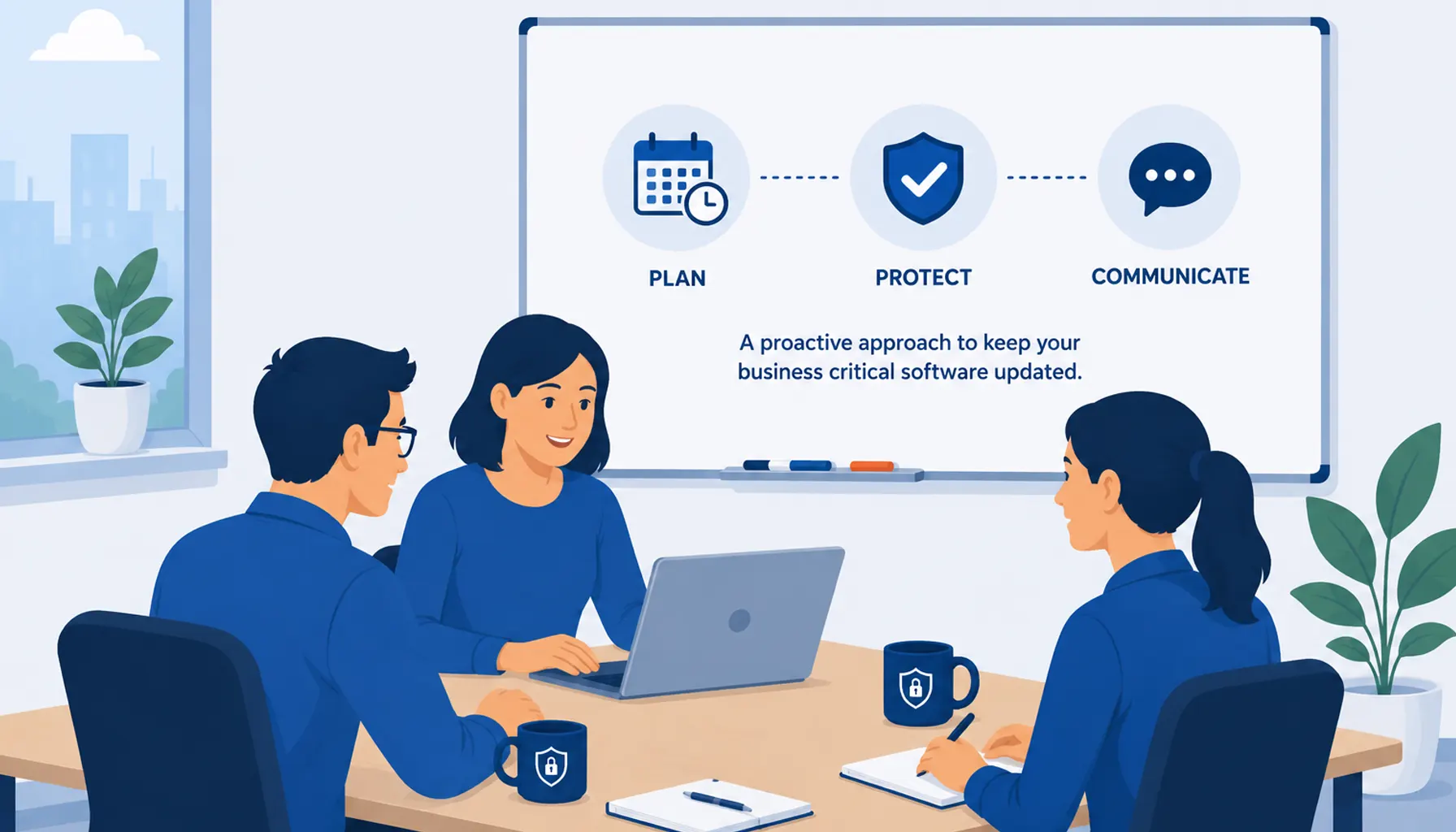
A good update strategy is not about rushing updates through blindly. It is about reducing risk through preparation, communication, and controlled implementation.
Thorough Planning and Assessment
Before applying updates, we first assess the wider impact on your environment.
That includes reviewing how the software is used within the business, whether the update could affect integrations or workflows, compatibility with operating systems and connected services, and the best timing to minimise disruption.
Where appropriate, updates are scheduled during quieter business periods or outside normal working hours.
This proactive planning helps avoid unnecessary disruption and reduces the likelihood of unexpected issues.
Backup and Recovery Protection
Before major updates are applied, we ensure appropriate backups are in place.
This may include system backups, database backups, virtual machine snapshots, or configuration exports, depending on the systems involved.
Just as importantly, we verify that recovery procedures are available if rollback becomes necessary.
Having a clear recovery path provides reassurance and significantly reduces operational risk.
Clear Communication and Transparency
One of the biggest frustrations businesses experience with IT changes is uncertainty.
We believe communication should be clear, straightforward, and proactive.
That includes providing clear timelines for planned updates, explaining any expected impact on users, highlighting changes staff may notice, and offering support quickly if issues arise.
Our aim is to ensure businesses feel informed and supported throughout the process rather than surprised by technical changes.
Security and Compliance Considerations
Updates are often released in response to newly discovered vulnerabilities.
Delaying them for too long can leave systems exposed to cyber threats that attackers may already be actively exploiting.
We monitor vendor advisories, security bulletins, and emerging threats to help businesses prioritise critical updates appropriately.
This is especially important for organisations handling sensitive client information, financial data, or regulated information under frameworks such as GDPR.
Balancing Stability With Modernisation
Businesses often rely on software that has evolved over many years.
In some cases, updates must be balanced carefully against legacy integrations or operational requirements.
Our role is to help businesses modernise sensibly without introducing unnecessary risk.
That means taking a measured approach which considers both immediate operational needs and long-term security and supportability.
Frequently Asked Questions
Why are software updates important for businesses?
Software updates help fix security vulnerabilities, improve stability, maintain compatibility, and ensure systems remain supported by vendors.
Can software updates cause business disruption?
They can if not planned properly, which is why updates should be assessed, scheduled carefully, and backed up beforehand.
How often should business software be updated?
Critical security updates should usually be applied as soon as practical, while other updates can be scheduled through planned maintenance windows.
What happens if an update causes problems?
Proper backups and recovery planning allow systems to be restored or rolled back quickly if issues occur.
Do small businesses need a formal update strategy?
Yes. Even smaller businesses benefit from structured patch management and proactive update planning to reduce security and operational risk.
Keeping Business Systems Secure and Reliable
At Telanova, we help businesses across Wokingham, Ascot, Bracknell, Reading and the wider Berkshire region keep their business-critical systems updated, secure, and running reliably.
Our proactive approach combines planning, monitoring, communication, backup protection, and practical support designed around how your business actually operates.
If you would like help improving patch management, reducing update-related risk, or creating a more proactive IT strategy, we are always happy to provide straightforward advice.
Explore our IT support services or call 01344 989 530 to speak with our team.