
Estimated reading time: 5 minutes
You may have heard the term “zero-day vulnerability” mentioned in the news after a major cyberattack or emergency software update.
But what does it actually mean, and why does it matter to businesses?
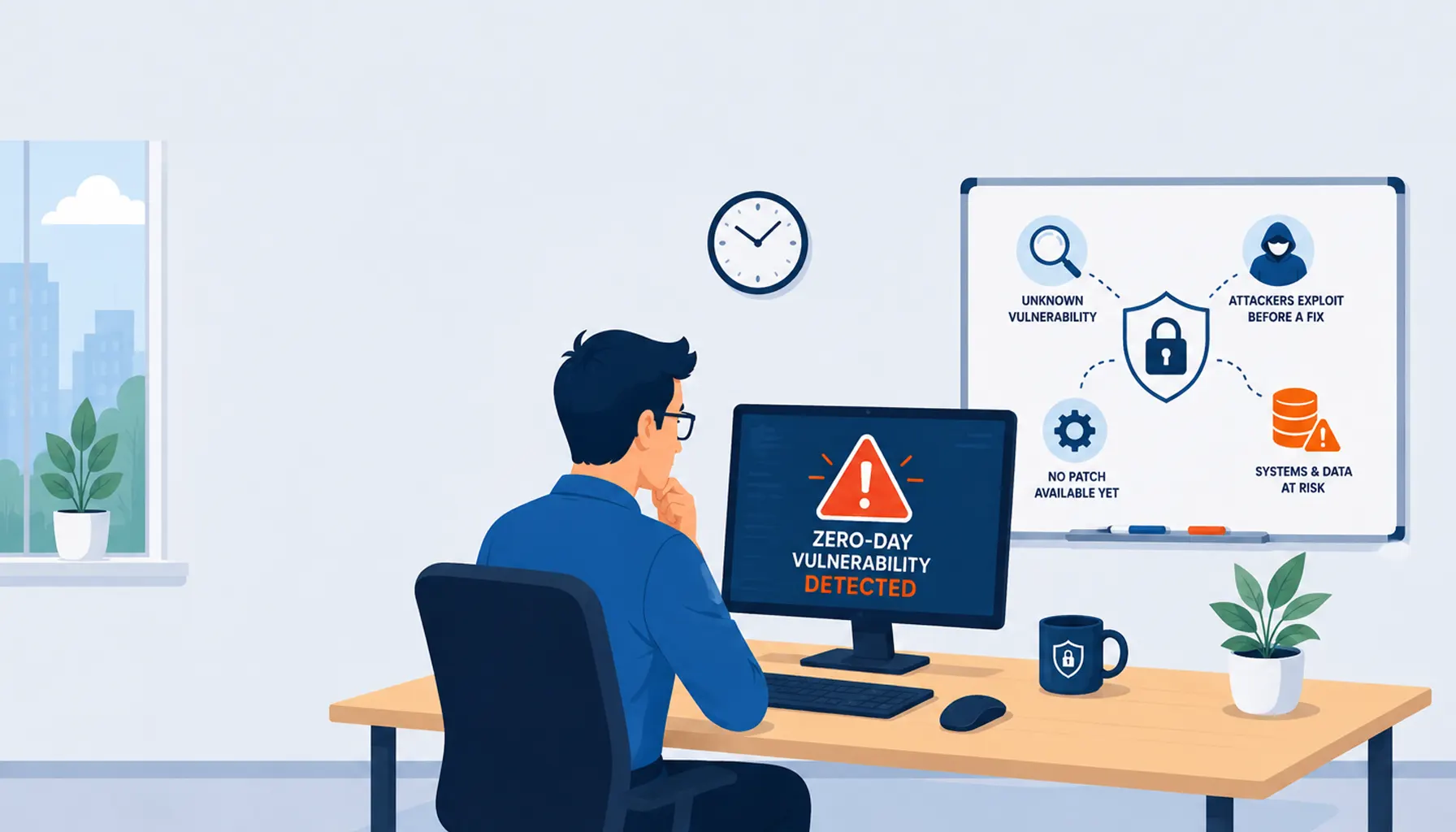
The simple answer is this: a zero-day vulnerability is a security flaw that attackers discover before the software developer has had a chance to fix it. That means there is often little or no protection available when the flaw first becomes known.
Because of this, zero-day vulnerabilities are considered some of the most dangerous cyber security threats organisations can face.
In this guide, we explain what zero-day vulnerabilities are, how they are exploited, and what businesses can do to reduce the risk.
What Is a Zero-Day Vulnerability?
A zero-day vulnerability is a security weakness in software, hardware, or firmware that is unknown to the vendor or developer responsible for fixing it.
The term “zero-day” refers to the fact that developers have had zero days to create and release a patch before attackers begin exploiting the flaw.
Unlike ordinary vulnerabilities that may already have fixes available, zero-day flaws are especially dangerous because organisations are exposed before protections are fully in place.
These vulnerabilities can affect operating systems, web browsers, business applications, mobile devices, cloud platforms, network equipment, and even security software itself.
In many cases, attackers actively search for undiscovered flaws because they know organisations will have little defence against them initially.
Why Are Zero-Day Attacks So Dangerous?
Most cyber security relies on known threats being identified and blocked.
With a zero-day vulnerability, attackers gain an advantage because the flaw is unknown when the attack begins.
This creates a window of opportunity where no official patch exists yet, antivirus signatures may not detect the attack, security teams may not know the vulnerability exists, and exploits can spread rapidly before mitigations are available.
Attackers may use zero-day vulnerabilities to install ransomware, gain unauthorised access to systems, steal sensitive business data, escalate privileges within networks, spy on users, or disrupt operations.
Because these attacks often target widely used software, a single vulnerability can affect thousands or even millions of devices worldwide.
How Zero-Day Vulnerabilities Are Discovered
Zero-day vulnerabilities are not always discovered by cybercriminals first.
In many cases, they are identified by security researchers, ethical hackers, software vendors, government agencies, or cyber security teams.
Responsible disclosure programmes allow researchers to report vulnerabilities privately so vendors can create fixes before details become public.
However, attackers also search for vulnerabilities independently and may exploit them secretly for weeks or months before discovery.
Once a vulnerability becomes public knowledge, organisations often face a race against time to apply updates before widespread exploitation begins.
Real-World Examples of Zero-Day Threats
Over the years, several high-profile cyberattacks have involved zero-day vulnerabilities.
Microsoft Exchange Server Vulnerabilities
Attackers exploited previously unknown flaws in Microsoft Exchange servers to gain access to email systems worldwide before patches were widely applied.
Browser Vulnerabilities
Google Chrome, Microsoft Edge, and Safari regularly release urgent updates for actively exploited zero-day flaws affecting web browsing security.
Mobile Device Exploits
Apple and Android devices occasionally receive emergency updates after vulnerabilities are discovered that could allow attackers to compromise phones remotely.
These examples highlight how quickly organisations can become exposed if systems are not updated promptly.
How Businesses Can Reduce the Risk
While no organisation can completely eliminate zero-day risk, there are several important ways to reduce exposure.
Keep Systems Updated
Applying updates quickly remains one of the most effective protections.
Vendors often release emergency security patches as soon as vulnerabilities become known, so keeping systems updated reduces the window of exposure.
This includes operating systems, browsers, firewalls, cloud services, and business applications.
Use Layered Security
Modern cyber security should not rely on a single tool.
Layered security combines multiple protections such as endpoint protection, multi-factor authentication, network monitoring, email filtering, web protection, and access controls.
If one defence fails, others can still help contain the threat.
Limit Access and Privileges
Restricting user permissions reduces the damage attackers can cause if a system becomes compromised.
Applying least privilege principles helps prevent attackers moving freely across networks after gaining access.
Monitor Security Alerts and Advisories
Cyber threats evolve quickly.
Businesses should stay informed about emerging vulnerabilities affecting the software and systems they use.
Managed IT providers often monitor these alerts proactively and help organisations respond quickly when action is needed.
Have Backups and Response Plans
Even with strong security controls, incidents can still happen.
Reliable backups and tested recovery plans help businesses recover faster and reduce disruption if systems become compromised.
Frequently Asked Questions
What is a zero-day vulnerability?
A zero-day vulnerability is a software or hardware security flaw that attackers discover before the vendor has released a fix or patch.
Why are zero-day attacks dangerous?
They are dangerous because attackers can exploit the vulnerability before organisations have protection available.
Can antivirus software stop zero-day attacks?
Traditional antivirus may not detect unknown threats immediately, which is why layered security and behavioural detection tools are important.
How do businesses protect against zero-day vulnerabilities?
Keeping systems updated, using layered security, limiting access privileges, monitoring alerts, and maintaining backups all help reduce risk.
Do small businesses need to worry about zero-day threats?
Yes. Many attacks are automated and target vulnerable systems regardless of business size.
Staying Ahead of Emerging Threats
At Telanova, we help businesses across Wokingham, Ascot, Bracknell, Reading and the wider Berkshire region stay protected against evolving cyber threats.
That includes proactive patch management, vulnerability monitoring, endpoint protection, and practical security guidance designed to reduce risk without unnecessary complexity.
If you would like a clearer picture of how well your systems are protected, or where improvements could be made, we are always happy to provide practical, straightforward advice.
Explore our IT support services or call 01344 989 530 to speak with our team.