
Estimated reading time: 4 minutes
Many businesses only think about IT support when something goes wrong.
A system crashes, emails stop working, or files become inaccessible - and suddenly everything grinds to a halt.
Proactive IT support takes a completely different approach. Instead of reacting to problems, it focuses on preventing them in the first place.
This shift can have a direct impact on productivity, security, and long-term business growth.
What Proactive IT Support Actually Means
Proactive IT support is about continuously monitoring, maintaining, and improving your systems to reduce the risk of issues before they impact your business.
Rather than waiting for something to break, your IT provider is actively working in the background to keep everything running smoothly.
This typically includes:
- 24/7 system monitoring
- Regular updates and patch management
- Security checks and threat prevention
- Performance optimisation
- Backup monitoring and testing
The aim is simple: spot potential issues early and resolve them before they become disruptive.
How Proactive IT Support Reduces Downtime
Downtime is one of the biggest hidden costs for any business.
Even a short outage can prevent your team from working, delay customer responses, and impact revenue.
With proactive support, many issues are identified and resolved before users are even aware of them.
For example:
- Hardware failures can be predicted and replaced early
- Software vulnerabilities can be patched before they are exploited
- Systems can be optimised before performance drops
This results in fewer interruptions and a more reliable working environment.
Why It’s More Cost-Effective Than Reactive Support
Reactive IT support may seem cheaper because you only pay when something breaks.
However, this approach often leads to:
- Emergency call-out costs
- Extended downtime
- Lost productivity
- Expensive recovery from data loss or cyber attacks
Proactive support spreads costs more predictably while reducing the likelihood of major incidents.
Over time, this typically leads to lower total costs and fewer unexpected problems.
The Role of Proactive Support in Cyber Security
Cyber threats are constantly evolving, and many attacks target businesses that are not regularly updated or monitored.
Proactive IT support helps protect your business by:
- Applying updates and security patches promptly
- Monitoring for suspicious activity
- Enforcing security policies such as multi-factor authentication (MFA)
- Supporting staff awareness and best practices
This significantly reduces the risk of common threats such as phishing, ransomware, and unauthorised access.
Supporting Growth, Not Just Fixing Problems
When your systems are stable and well-managed, your team can focus on their work rather than dealing with IT issues.
Proactive IT support also allows for better forward planning.
Instead of reacting to problems, you can:
- Plan upgrades and improvements
- Scale systems as your business grows
- Introduce new tools with confidence
This turns IT into a strategic asset rather than just a support function.
Proactive vs Reactive IT Support: What’s the Difference?
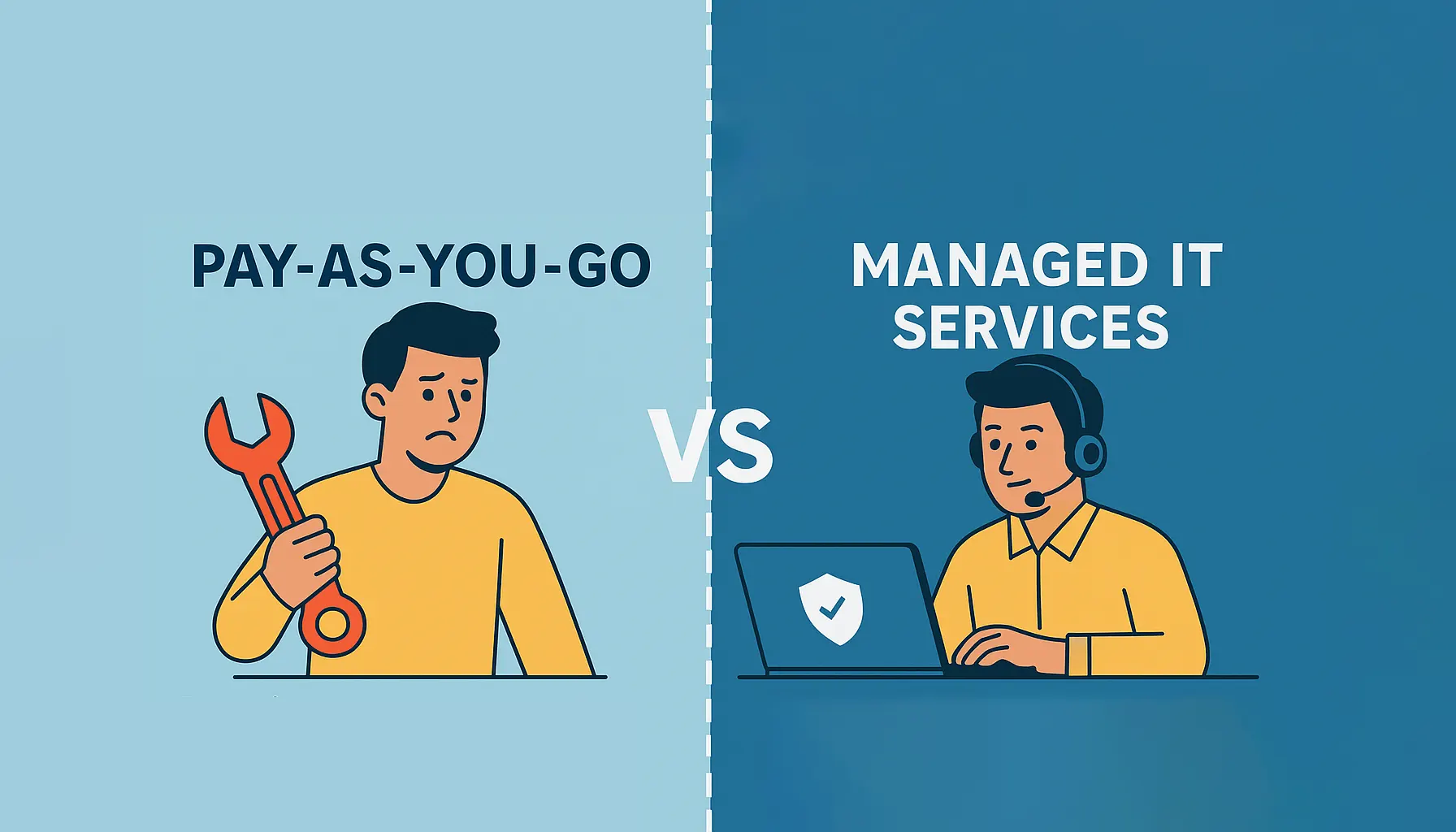
Understanding the difference between proactive and reactive IT support can help you choose the right approach for your business.
| Feature | Proactive IT Support | Reactive IT Support |
|---|---|---|
| Approach | Prevents issues before they happen | Fixes issues after they occur |
| Downtime | Minimal and often avoided | More frequent and unpredictable |
| Cost Structure | Predictable monthly investment | Unpredictable, often higher long-term costs |
| Security | Continuous monitoring and updates | Addressed only after issues arise |
| System Performance | Optimised and maintained regularly | Only improved when problems appear |
| Business Impact | Supports growth and stability | Can disrupt operations and productivity |
| Response Time | Issues often resolved before users notice | Dependent on reporting and response delays |
Most businesses quickly notice the difference when moving to a proactive approach - fewer issues, less stress, and more time focused on their work.
Frequently Asked Questions About Proactive IT Support
What is the difference between proactive and reactive IT support?
Proactive IT support focuses on preventing issues before they occur through monitoring, updates, and maintenance. Reactive IT support only addresses problems after they happen, often resulting in downtime and disruption.
Is proactive IT support more expensive?
Not usually. While proactive support often involves a monthly cost, it typically reduces expensive emergency fixes, downtime, and data recovery costs - making it more cost-effective over time.
What does proactive IT support include?
It usually includes system monitoring, software updates, cyber security protection, backup management, and performance optimisation. Many providers also include strategic IT planning and advice.
Can proactive IT support prevent all issues?
No system is completely risk-free, but proactive support significantly reduces the likelihood and impact of problems. When issues do occur, they are usually identified and resolved much faster.
Do small businesses need proactive IT support?
Yes. Small businesses are often more vulnerable to downtime and cyber threats, as they may not have internal IT teams. Proactive support helps maintain stability and protects business operations.
How quickly can a business switch to proactive IT support?
In most cases, a business can transition within a few days to a couple of weeks, depending on the size of the organisation and the current setup. The process usually involves onboarding, system checks, and implementing monitoring tools.
Looking to Take a More Proactive Approach to IT?
At Telanova, we help businesses across Bracknell, Wokingham, Ascot, Reading and Maidenheadkeep their systems running smoothly, securely, and without unnecessary disruption.
Our approach is simple: reduce issues before they happen, support your team day-to-day, and make sure your technology works reliably in the background.
If you're currently dealing with recurring IT problems or feel like your setup could be working better, we’re always happy to take a look and offer practical advice.
Even a small change in how your IT is managed can make a noticeable difference to reliability and day-to-day productivity.
Explore our IT support services or call 01344 989 530 to speak with our team.